Climate Action (Sustainable Development Goal - 13, 15, 1, 2 & 3)
The United Nations General Assembly has defined 17 Sustainable Development Goals (SDGs) needing action by the nations of the World. It is indeed a matter of great satisfaction that IFFDC has made a significant contribution towards 5 goals, Sustainable Development Goal 13 (SDG-13) "Climate Action", SDG-15 "Life on Land", SDG-1 "No Poverty", SDG-2 "Zero Hunger" and SDG-3 "Good Health & Well Being" through its multiple Social Forestry Development Programmes, Integrated Watershed Management, Climate Proofing activities etc. The United Nations General Assembly has defined 17 Sustainable Development Goals (SDGs) needing action by the nations of the World. It is indeed a matter of great satisfaction that IFFDC has made a significant contribution towards 5 goals, Sustainable Development Goal 13 (SDG-13) "Climate Action", SDG-15 "Life on Land", SDG-1 "No Poverty", SDG-2 "Zero Hunger" and SDG-3 "Good Health & Well Being" through its multiple Social Forestry Development Programmes, Integrated Watershed Management, Climate Proofing activities etc.
1. Social Forestry Development
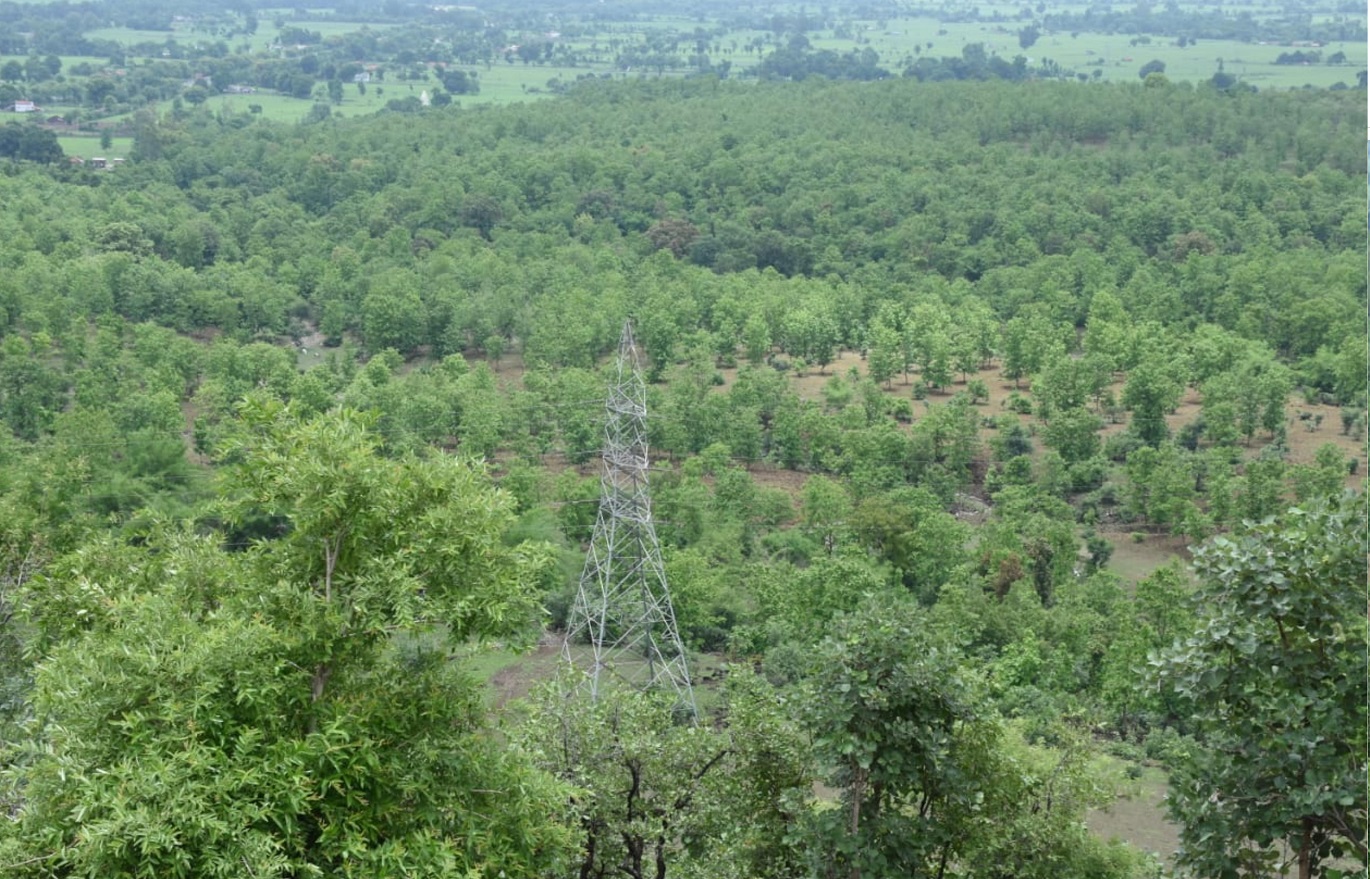
IFFDC's flagship Farm Forestry programme is aimed at mitigating the wellknown deleterious climate change effects by developing participatory forestry on waste and marginalised lands belonging to individual farmers, village Panchayats and the Government.
Accordingly, as an initial step, IFFDC identified large tracts of wasteland, which had been lying almost barren for decades. These acquired wastelands in the states of Uttar Pradesh, Madhya Pradesh, Rajasthan and Uttarakhand are Panchayat lands in Rajasthan, individual lands in Uttar Pradesh & Uttarakhand and Revenue land in Madhya Pradesh. The concerned communities are then organised by IFFDC into Primary Farm Forestry Cooperative Societies (PFFCS), designed as the key community institutions to manage and maintain the developed participatory forests, on a sustainable basis. 151 Primary Farm Forestry Cooperative Societies (PFFCS) have been set up and their capacities built up for management of the community forests developed on 29,421 Hectares.
IFFDC supports the PFFCS with the necessary technical and financial inputs, as well as capacity building, networking, marketing and resource mobilisation inputs. As a result of its interventions, green cover in more than 500 villages has not only been substantively improved, but degraded lands therein have also been restored. Economic returns from existing forests are presently sourced from restricted and selective pruning of the created forests, Grasses and Minor Forest Produce (MFP) etc. IFFDCs unique initiative of Carbon Credits Trading has further enhanced green revenue for the community along with other environmental services/benefits.
IFFDCs integrated approach has also meant due attention to related activities such as control of illegal felling, prevention of encroachment and forest fires, accelerating forest yield for improved economic returns to the stakeholders, making available commercial options such as trading of carbon credits generated by the carbon sequestration rendered by these forests and defining the usufruct rights of these lands, etc. The PFFCS are being motivated to undertake plantation of improved fast growing as well as indigenous long gestation plant species and to undertake the business of Agri-inputs supply for economic self-sufficiency and sustainability.
Research and development work on Forestry improvement, an important input for continued qualitative and quantitative enhancement of ongoing efforts, is also being undertaken by these PFFCS. Four research trials of 153 Genotypes of Neem (Azadirachta indica) have been undertaken in the PFFCS of Uttar Pradesh, Rajasthan and Madhya Pradesh with the help of IFFCO and under the technical guidance of Forest Research Institute, Dehradun. The 'Miyawaki' method (a Japanese Technique) for developing fast and dense forests of indigenous species has also been adopted in Kanaksinghpur PFFCS of Uttar Pradesh.
Out of the total 17 Sustainable Development Goals (SDGs) of the United Nations, this project addresses 5 SDGs. The developed forests sequestrate atmospheric carbon, which helps in mitigating climate change, addressing SDG–13 “Climate Action”. The forest developed in waterlogged areas has now been developed into a bird sanctuary. Wild life and many new plant species and grasses have emerged in these forests, which are contributing to SDG – 15 “Life on Land”. These developments also contribute to the SDG–1 “No Poverty” as the plantation activities generate employment for the rural community, in turn generating income for their families. IFFDC also supports fruit plantation under its Agri-horti system, which noticeably increases nutritive food availability in the project area addressing thereby the SDG–2, “Zero Hunger” and SDG-3, “Good Health & Well Being”.
PROJECT DETAILS
|
State |
District |
Total Covered Area (ha) |
Total Existing Trees (Lakh) |
|
Uttar Pradesh |
Sultanpur, Raebareli, Prayagraj, Kaushambi |
12,951 |
51.39 |
|
|
Pratapgarh, Lucknow, Amethi, Unnao |
|
|
|
Uttarakhand |
Nainital, Champawat |
207 |
0.87 |
|
Rajasthan |
Udaipur, Chittorgarh, Rajsamand |
9,713 |
20.85 |
|
Madhya Pradesh |
Sagar, Chhatarpur, Tikamgarh |
6,550 |
35.44 |
|
|
Total |
29,421 |
108.55 |
New Initiatives in Social Forestry
(a) Agro-forestry System Development:
Indian Forests are helping in improving the livelihoods of about 3000 lakh people and are important for mitigating Climate Change. A voluntary reduction of 2.5–3 billion tonnes of additional CO2 e by 2030 has been committed to UNFCCC by the Government of India from its forestry sector. Even were all of India's open forests to be taken up for restoration, only about 0.9 million tonnes of CO2e worth additional carbon sink would expectedly be created. The balance will need to be sourced from Trees outside Forests (ToF), for achieving which, Agro-forestry is indeed one of the best options. Therefore, it becomes imperative to focus on the potential of ToF. It is in this context of India's Nationally Determined Contribution (NDC) commitment that IFFDC has diversified into the new initiative of developing agro-forestry on farmer fields. This work helps in not only mitigating Climate Change but also in additional farmer income generation, thereby contributing to the Government of India mission of “Doubling Farmer's Income”.
The plant species selected and planted under agro-forestry are commercial, fast growing and early maturing varieties including Melia composita (Burma Neem), Maharukh (Ailanthus excelsa) and Eucalyptus Clone etc. During the year, 0.70 lakh saplings have been planted on the fields of 71 farmers in Uttar Pradesh.
(b) Agri-Horti System Development
The Government of India “National Horticulture Mission” (NHM) aimed at ensuring nutritional security and income generation for farmers, has been operational since 2004. Towards fulfilling the objectives of the SDGs No. 1 and No. 2, "No Poverty" and "Zero Hunger", IFFDC has carefully grafted the component of Agri-Horti system development to its existing Social Forestry and Climate Change portfolio, thereby also contributing to the objectives of NHM.
IFFDC has also been generously providing financial and technical support to farmers for fruit species plantation on their arable lands along with traditionally grown crops. During the year, about 844 saplings of Mango, Lemon and Guava were planted to give quick returns to farmers. The encouraging results evidenced by the adoption of Agri-Horti programmes has had a visible demonstration effect on farmers in the adjacent areas and attracted more farmers to this system.
(c) Steps for Carbon Credits
Afforestation & Reforestation absorbs Carbon Di-oxide (CO2) and thus reduces the CO2 in the atmosphere. This reduction of CO2 can be used for off-setting the emission of CO2 mainly by industries in developed countries. Such reduction of CO2 from the atmosphere can be traded as Voluntary Emission Reduction (VER) and is in demand in developed countries particularly in the United States of America and Europe to meet their international commitments of emission reduction.
Recognizing the transformative potential of “Carbon Finance” to unlock new avenues for forest-dwelling and rural communities to monetise their outputs and enhance incomes, as also incentivise continuous and accelerated action in forestry, IFFDC took the innovative step of registering a carbon credit project with VERRA Registry, Washington DC covering 189 ha plantation area developed during 2008 to 2013 in 11 PFFCS of Uttar Pradesh. To facilitate the carbon credit trading mechanism, M/s Emergent Venture India Pvt. Ltd. (EVI) were appointed as consultants for the preparation of the project proposal, development and facilitation of validation, verification of Afforestation/Reforestation Project and sale of carbon credits. The GPS Mapping of the forestry sites, VCS validation audit work and verification audit of the project completed.
Carbon credit project was registered in April 2023 with VERRA which has resulting in 78000 carbon credits under Verified Carbon Standard (VCS) being issued in the month of May, 2023 for the period from 2008 to first quarter of 2022. Of these, 49,498 carbon credits have so far been sold on the international market, resulting in a revenue of Rs 7.75 crore. Of the total revenue generated, so far Rs 1.50 crore has been shared among 11 forestry cooperatives and Rs 3 crore shared among 120 farmers on whose fields the accredited plantation was done. The Second Verification Audit of this project in the period of July 2022 to June 2025 has also been completed.
Tri-party agreements on sharing the revenue from carbon credits, after deduction of the expenses on development of the carbon credit project including validation & verification audit fee, GPS Mapping. VERRA Fee etc. were signed between IFFDC, Forestry Cooperatives and land owner member farmers. Out of the net revenue so generated, the Agreement specifies that 25% be shared with the concerned Forestry Cooperative Societies, 50% with the Land owner member farmers and 25% be the share of IFFDC. This project will generate carbon credit revenue for all the three stakeholders for 30 years from 2008 to 2038.
This path breaking success of IFFDC's Carbon Credit pilot project has established an inspiring milestone, further bolstering its endeavours and morale. IFFDC has since diligently devised and officially enlisted a second project with the VERRA Registry in Washington DC, the validation Audit of which has since been completed.
Progress
- Plantation on 209 ha area (117 ha in Uttar Pradesh, 20 ha in Uttarakhand, 36 ha in Madhya Pradesh and 36 ha in Rajasthan) has been raised with 2.24 lakh saplings (1.28 lakh in Uttar Pradesh, 0.20 lakh in Uttarakhand, 0.37 lakh in Madhya Pradesh, 0.39 lakh in Rajasthan) in different PFFCS. Major species include Melia composita (Burma Neem), Eucalyptus Clone, Teak, Shisham, Maharukh, Tejpatta and Reetha etc. 10.74 lakh saplings of Neem have been supplied for plantation in different regions of the country. During the year, 500 Carbon Credits were sold in National market.
- 105 Annual General Body Meetings and 680 Executive Committee Meetings of different PFFCS have been organised. Additionally, 3,215 meetings of SHG and 44 Meetings of PFFCS Secretaries were organised. Audit work of 114 PFFCS has been completed.
- 05 Health camps were organised, in which 250 patients were examined and free medicines were provided. 05 Veterinary camps were organised, in which 212 Cattle were treated. Important internationally/nationally observed days such as Environment Day, Women Day etc. were celebrated.
- For capacity building of newly formed SHGs, 03 training programmes on The Proper Functioning & Management of SHG were organised. The Group Members felt that the training has helped in understanding and performing their roles and responsibilities in an efficient manner.
- For Skill Development, a 6 months duration training on tailoring has been imparted to SHG members in Mailkmau, PFFCS (U.P.), as a result of which, 20 women members have developed their skills in stitching of various garments. In another useful programme, 16 Secretaries and members of PFFCS in Uttarakhand have been upskilled regarding the latest technical aspects of Honey Bee Keeping by organising an exposure visit to Sukhi Daang in district Champawat.
- For upgrading knowledge about Forestry and other social aspects, an Exposure cum Study visit was organised for 23 PFFCS Chairmen in the state of Madhya Pradesh. Likewise, 55 PFFCS Chairmen of Rajasthan were taken on an Exposure visit to KVK Lunkaransar (Bikaner) and other places and introduced to innovative agro technology for drought proofing crop production. 45 PFFCS Chairmen of Uttar Pradesh visited the Faizabad Agriculture University where they were initiated into the new horticulture technology of preparing Grafted Plants and Nursery Management etc.
(d) Green Belt Development
IFFCO has awarded a Green Belt Development Project Phase – 2 to IFFDC for increasing tree cover in the IFFCO Paradeep Plant area aimed at compliance to the norms of Pollution Control Board and contributing towards combating climate change. The project area in the Paradeep plant is waterlogged, therefore, the heaps were constructed and plantation of Mangrove and other suitable species was taken up on heaps.
- Total 28,100 saplings of Neem, Karanj, Casurina, Conocarpus (mangrove species) and Acacia have been planted and maintenance activities i.e. Staking, Hoeing, Weeding and Irrigation etc. have also been undertaken. The growth of plantation in the 25 hectare waterlogged area is satisfactory
- Maintenance works i.e. irrigation, hoeing weeding, Basin making etc. are being done. Consequently, 99% survival of the plants has been achieved.
OUTCOMES OF FARM FORESTRY PROJECTS
The Farm Forestry Project focuses on mitigating climate change through large-scale afforestation of barren, problematic and waterlogged lands and it has significantly impacted rural communities by converting wasteland into sustainable multipurpose forests. The project integrates ecological restoration with socio-economic empowerment of rural communities, specifically targeting marginalised farmers and women. The major outcomes are as follows:
- PFFCS are serving as nodal agencies for environment up-gradation and catering to the fuel wood, fodder as well as other community needs of such as the supply of Agri-inputs.
- Problematic lands (Sodic, Saline, Ravine and Waterlogged, etc) have been restored and transformed into cultivable lands and thus productive assets.
- Ecological balance, eco-restoration and bio-diversity conservation of project tracts are major benefits of afforestation of these tracts.
- The Carbon Credit Project is generating sustainable income for member farmers.
- Farm Forestry Programme has engendered additional employment opportunities through various farm forestry activities for local communities, women being especially benefitted.
- Revolving Fund is enabling PFFCS as well as SHG members to establish various micro-enterprises, generating thereby sustainable and dignified livelihoods. The operationalised micro-enterprises are helping to achieve the aim of doubling Farmer's income.